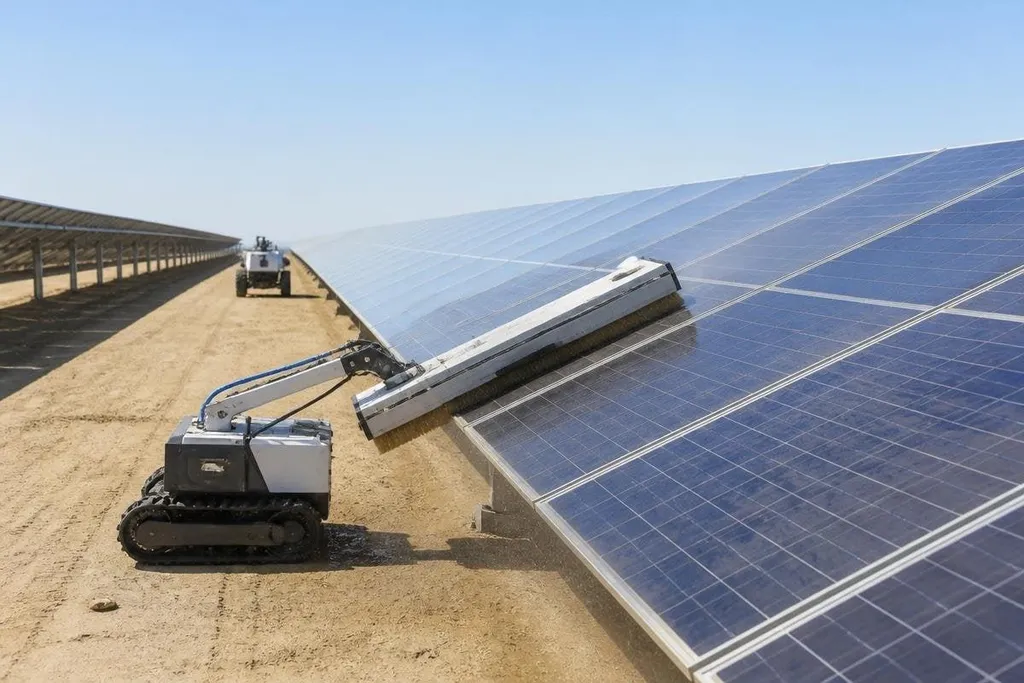
A solar panel can lose output when dust, dirt, or shade blocks part of its surface. Robots could help by cleaning panels, checking faults, and moving across large sites without sending workers into every row.
- Cleaning: removes dust before it cuts energy output
- Inspection: finds damaged panels and loose connections
- Site work: handles repeat jobs across large solar farms
Cleaning panels with less water
Dust is a basic problem with solar power. A dirty panel receives less sunlight, so it can produce less electricity than the same panel when its surface is clear. The size of that loss depends on local weather, dust, rain, panel angle, and the cleaning method.
A cleaning robot can move along panel rows and use brushes, air, or a small amount of water. Its value comes from repeat work: the robot can return to the same rows on a set schedule or after sensors detect a buildup of dust.
That schedule still needs care. Cleaning too often can waste water, battery power, and machine time. A dry brush can also scratch a panel if its contact surface collects sand. The useful system will match cleaning to the site, rather than treating every solar farm the same way.
Finding faults before they cut output
Robots can also inspect panels and the equipment around them. Cameras may find cracked glass, damaged frames, or plant growth near the panel rows. Thermal cameras can show hot areas that may point to an electrical fault, though a hot image alone doesn't prove the cause.
The robot can cover ground in a more repeatable pattern than a person walking between rows. The inspection data then needs a worker or software system to check the finding, locate the panel, and plan a repair. Detection saves value only when the site can act on it.
Solar inspection claims depend on the panel type, sensor, site, weather, and test date. Robot24.com can connect those details to inspection robots and autonomous systems, helping you tell a field trial from a short demo before the article turns to moving panels and site work.
Moving panels and handling site work
Some solar systems use motors to change panel angles during the day. A robotic system could help set those angles, check the hardware, or place panels during construction. Those jobs can raise plant output or cut installation time, but they don't change the panel's basic ability to turn sunlight into electricity.
That difference matters when you compare a robot with a new panel design. That system may help a solar farm produce more of its possible output by reducing dirt, downtime, or missed faults. It doesn't automatically raise the conversion rate of the solar cells.
Solar construction also brings rough ground, heat, wind, cables, and tight access points. A robot that works on a clean test surface may struggle when rows are uneven or panels have different frames.
The maker needs to show the machine working on the panel type and terrain you actually have.
The limits that decide the cost
A solar farm operator has to count more than the robot's purchase price. The full cost can include charging, spare parts, software, remote supervision, transport between sites, and repairs after contact with panels or frames.
Weather adds another limit. Rain can change how a brush moves across glass, while strong wind can affect a robot's balance and sensor readings. A system may also need a worker nearby when it gets stuck, loses its route, or meets an object that was missing from its map.
The proof should be measured at the plant. Compare energy output, water use, cleaning time, fault response, and repair costs before and after the robot arrives. A higher output figure has little value if the machine takes too long to run or needs constant help.
A buyer's checklist
Use these checks before choosing a solar robot:
- Name the task: Decide if the machine will clean panels, inspect them, support construction, or do more than one job.
- Check the surface: Confirm its wheels, brushes, sensors, and route system work with your panel frames and row spacing.
- Ask for site results: Request measured output, cleaning time, water use, and intervention rates from a similar solar site.
- Price the support: Add charging gear, spare parts, software fees, staff time, and travel between rows.
- Plan the failure: Set out who responds when the robot stops, loses its route, or finds a damaged panel.
I’d treat a cleaning or inspection robot as a plant maintenance tool, not a way to make solar cells stronger. The purchase makes sense when it cuts repeat labor or finds lost output early, and that case has to show up in the site's own energy and cost records.